By: Peyton McDermott
10 September, 2026
It’s been 25 years since the terrorist attacks of September 11, 2001—as well as the launch of the American-led military campaign known as the Global War on Terror (GWOT), former President George W. Bush’s response to the 9/11 tragedy. In a formal speech to Congress on September 16, 2001, George W. Bush first used the phrase “war on terror” to refer to the United States’ initiative to put an end to the rising uneasiness over the threat of terror. In his address, he declared, “This crusade, this war on terrorism is going to take a while. And the American people must be patient. I’m going to be patient.” Through the ensuing enactment of the USA Patriot Act, formally the Uniting and Strengthening America by Providing Tools Required to Intercept and Obstruct Terrorism, Bush’s administration incited global counterterrorism efforts as a reaction to the events of 9/11.
While the War on Terror primarily focused its efforts on foreign conflict, the USA Patriot Act was still a statute which enhanced the scope of domestic surveillance, granting the government the right to monitor citizens and apprehend “suspected terrorists,” which was predominantly an issue of racial profiling—to do with the rise of islamophobia at this time. The act was deeply controversial, challenged for being unconstitutional in its provisions of wiretapping, authorization of indefinite detention, infringement of the freedom of association, and the search of property and records through National Security Letters (NSLs). As of December 2020, the Patriot Act remains unrenewed, with the House of Representatives indefinitely postponing it.
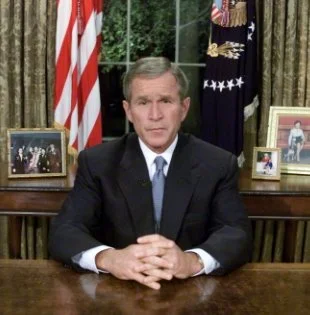
The 9/11 attacks resulted in approximately 3,000 deaths and 6,000 injuries in an act of unprecedented terrorism on behalf of the Islamist militant organization, al-Qaeda, led by Osama Bin Laden. The day marked a burst of patriotism, and the Global War on Terror was quickly thereafter declared by then-President George W. Bush, who initially sought to deploy U.S. forces against al-Qaeda, stationed in Afghanistan. There, American planes and anti-Taliban Afghani ground troops destroyed al-Qaeda’s training camps, killed and/or captured many of its operatives, and began the decade-long hunt for Osama Bin Laden that would follow.
This narrative, for the most part, is widely recognized. Lesser-known, it seems at least in modern education regarding the subject, were the resulting invasions of Afghanistan and Iraq by United States military occupation, inciting respective wars within each. Most prominent among the lasting legacy of the GWOT was the notorious abuse that took place in Iraq’s Abu Ghraib; Abu Ghraib denoted a series of war crimes against the three categories of prisoners, from individuals without any crime having been charged, those suspected of being leaders of the Iraqi insurgency, to those suspected of crimes against United States occupation. The burgeoning reports of the prison’s massive human rights violations came to public attention: physical and psychological torture, executions, and otherwise brutal treatment were among these violations.
In April 2004, images of Abu Ghraib’s abuses were released by CBS, broadening the awareness of the GWOT’s consequences internationally; while the photographs—most famously The Hooded Man—appalled the nation, it was not enough to keep George W. Bush from being re-elected in the same year. The Bush administration condemned the events in Abu Ghraib, with Bush stating in an interview with Alhurra Television, “They [the Iraqi people] must understand that what took place in that prison does not represent the America that I know.” Yet, with the release of the Torture Memos in 2009, documents were shown to have authorized the use of torture and mistreatment against the detainees of Abu Ghraib dating back to August 2002. In Afghanistan, the United States’ involvement in the country following 9/11 initiated the subsequent 20-year long War in Afghanistan from 2001-2021. The war resulted in enormous detriment, with hundreds of thousands of civilians and Afghan military personnel having been killed during the conflict, leaving a scar on the economic, political, and social order of Afghanistan over the decades it’s been engaged in conflict.
