Peyton McDermott
September 21, 2026
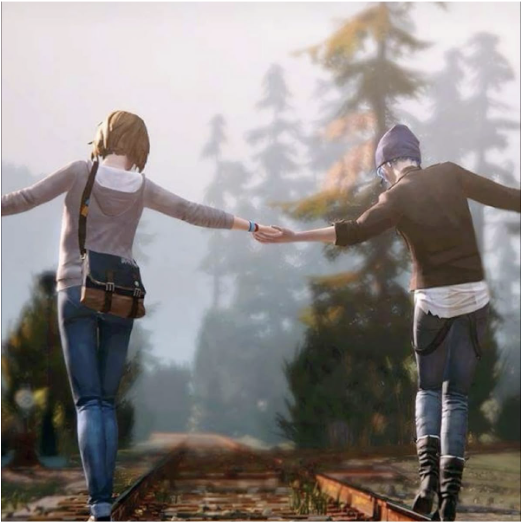
Entertainment is revisiting the choice-based adventure game sensation, Life is Strange, with its upcoming television series adaptation set to release on Amazon Prime Video. With actresses Maisy Stella and Tatum Grace Hopkins at the forefront of the production, the anticipated TV series has brought the franchise back into the limelight. Life is Strange itself typically refers to the first installment of an eponymic anthology of games, all having to do with the human experience and a grapple for identity within a strange world, as well as the occasional encounter with superpowers; though this, too, was merely a metaphor for intrapersonal and external conflict within the characters'’ lives. The franchise, while containing a multitude of titles, is predominantly centered around Life is Strange 1, on which the television adaptation is based.
The first installment was initially developed by Dontnod Entertainment in 2013, and was subsequently released episodically in 2015 after their signing with Square Enix. Life is Strange 1 follows protagonist Maxine “Max” Caulfield making a return to her hometown—Arcadia Bay, Oregon—with the intent to attend the prestigious Blackwell Academy and study photography under Mark Jefferson. After years of separation, she’s reunited with her childhood best friend, Chloe Price, in the midst of a life-threatening incident that triggers Max’s ability to rewind time so that she might save Chloe—for the first time. From there, Max is set on the course of uncovering the truth about Chloe’s close friend Rachel Amber, and her disappearance; the gradually increasing prevalence of strange occurrences throughout Arcadia Bay; as well as Max’s very own Blackwell Academy. Principally, Life is Strange focuses on the entanglement of time and coming-of-age: both processes have to do with identity, and Life is Strange utilizes this as a discussion on the identity of adolescents.
Life is Strange is filled with plenty of references, both media-related and scientific. Most predominantly lies the evident influence of Twin Peaks—a TV series centered on the disappearance of homecoming queen Laura Palmer—throughout the first two installments, 2015’s Life is Strange,, and Life is Strange: Before the Storm, which relate to Laura Palmer’s apparent parallel: Rachel Amber. Furthermore, metaphysical theory is greatly ingrained in the game, to do with Max Caulfield’s time travel mechanism. The developers noted that it took much deliberation amongst the team to decide on an approach to the paradox of tangent, or alternate, universes throughout the timestream. With that came various mentions and allusions to related scientific theories, such as the branches of chaos theory, the Grandfather paradox, time tourism, and the integral multiverse theory. Still, while Max’s superhuman ability to rewind time assumes prominence within the gameplay, narratively it serves a much greater purpose: acting as a symbol of the inevitability of experiencing hardship, grief, and adulthood, as well as the necessary acceptance of facing regret and life’s inescapable consequences head-on.
The game’s soundtrack also seemed to draw inspiration from media, particularly from that of the 2006 teen drama TV series Friday Night Lights. While both share artists such as José González, Bright Eyes, Mogwai, and Sparklehorse, the earliest Life is Strange installment is most notable for its opening track, “To All of You” by Syd Matters. The story was intended to be informed by the narrative as told through its music selection, curated by Syd Matters’ lead Jonathan Morali. With 22 songs comprehensively featured on the official soundtrack, both licensed songs and an original score, the selections have been argued to be integral to the development team’s otherwise stylistic choices. This is made explicit by director Raoul Barbet, stating, “We really wanted this feeling of being part of a whole High School … I think a lot of players love this introduction; the use of music here is really important as Max feels insecure in this atmosphere. We wanted her to be isolated; music is a great way of isolating yourself … ”
Conclusively, the franchise is generally regarded in high favor, primarily among adolescents, the demographic whom Life is Strange’s developers had set out to address through their storytelling. The video game’s ability to tackle significant issues, as seen throughout teenagers’ experiences, is just one of the many accolades the series has earned. One UPHS student shared, “Life is Strange is important to me because it explores heavy topics in a realistic way that feels natural to high school students, which is ironic, considering it follows a sci-fi plot. The characters feel human and relatable to life—because it’s strange. Ha ha.” In this regard, the game’s directors have shared that plentiful research had been conducted in the aim of sensitively contextualizing the subjects which they deemed critical to explore, as evidenced by co-director Michael Koch, “... so we did a lot of research to be sure that we were dealing with those themes in a good way.” Thus, the aspiration to detail not only a cautionary tale about choice and consequences, but the everyday experiences and struggles of youth, seems to have been fulfilled with admiration on behalf of Life is Strange’s fanbase.
